Back pain is one of the most common reasons people begin looking for a more supportive chair. Whether it’s caused by long hours of sitting, age-related changes, muscle fatigue, or recovering from an injury, discomfort in your back can affect almost every part of daily life.
Many people are surprised to learn that a power lift chair can do much more than help someone stand up. A well-designed lift chair also provides ergonomic support that promotes better posture and helps reduce pressure on the spine during everyday activities.
While a lift chair is not a medical treatment or cure for back pain, it can play an important role in creating a more comfortable and supportive home environment.
Why Sitting Can Make Back Pain Worse
Many traditional sofas and recliners prioritize softness over support.
While they may feel comfortable for a short time, prolonged sitting in a chair without proper support can lead to:
- Slouching
- Rounded shoulders
- Increased pressure on the lower back
- Neck and shoulder tension
- Muscle fatigue
Over time, these poor sitting habits may contribute to discomfort and stiffness.
A supportive chair encourages healthier body alignment throughout the day.
How a Lift Chair Supports Your Back
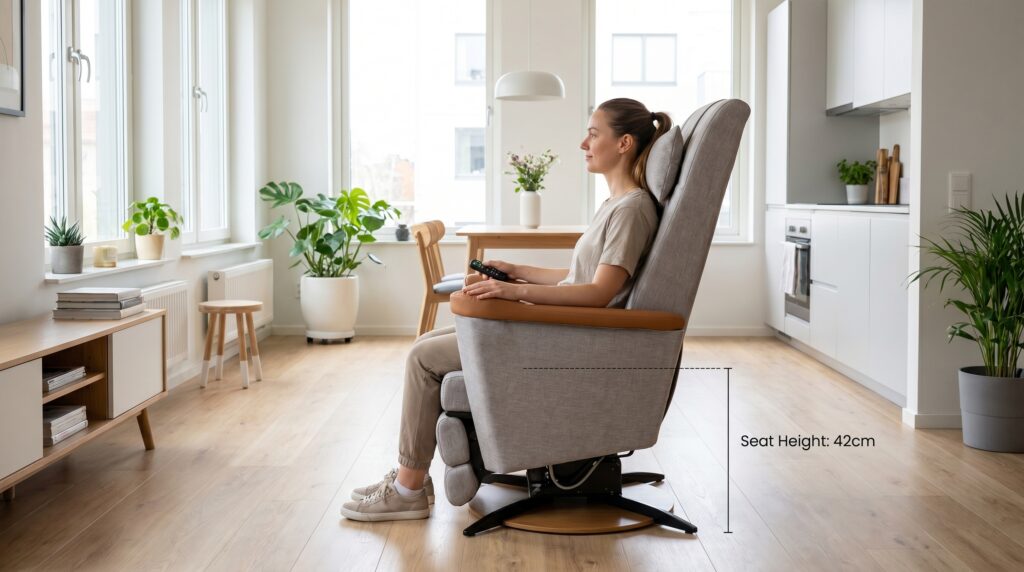
Modern lift chairs are designed with ergonomics in mind.
Instead of allowing your body to sink into the seat, they provide balanced support for your:
- Lower back (lumbar region)
- Neck
- Shoulders
- Hips
- Legs
This even distribution of weight helps reduce pressure points and encourages a more natural sitting position.
Adjustable Positions for Better Comfort
One of the biggest advantages of a dual-motor lift chair is the ability to adjust the backrest and footrest independently.
This allows users to find the position that feels most comfortable for their body.
For example, you can:
- Sit upright while reading
- Slightly recline while watching television
- Elevate your legs after a long day
- Relax in a partially reclined position without placing unnecessary stress on your lower back
Small adjustments throughout the day can help reduce stiffness caused by remaining in one position for too long.
Standing Up Without Extra Strain
For many people with back pain, the most uncomfortable moment isn’t sitting—it’s standing up.
Pushing yourself out of a low chair places additional pressure on your spine and surrounding muscles.
A power lift chair gently raises and tilts forward, helping you move into a standing position with significantly less effort.
This reduces unnecessary strain on:
- Lower back muscles
- Hips
- Knees
- Core muscles
The result is a smoother, more comfortable transition.
Supporting Better Posture
Good posture isn’t about sitting perfectly straight all day.
It’s about maintaining healthy spinal alignment while allowing your body to remain relaxed.
A lift chair encourages better posture by providing:
- Lumbar support
- Stable armrests
- Proper seat height
- Balanced cushioning
- Adjustable reclining angles
These features make it easier to maintain a comfortable sitting position during daily activities.
Who May Benefit?
A lift chair may be helpful for people who:
- Experience occasional lower back discomfort
- Spend long hours sitting
- Recover from surgery
- Have arthritis or joint stiffness
- Need help standing comfortably
- Want ergonomic seating for everyday use
If your back pain is severe, persistent, or caused by a medical condition, consult a healthcare professional for diagnosis and treatment.
Tips for Reducing Back Discomfort While Sitting
In addition to choosing a supportive chair:
- Change your sitting position regularly.
- Stand up and stretch every 30–60 minutes.
- Keep your feet comfortably supported.
- Avoid slouching.
- Follow any advice from your healthcare provider or physical therapist.
Combining healthy habits with ergonomic furniture often provides the best results.
Why Choose THE LIVE YOUNG?
At THE LIVE YOUNG, we believe great furniture should support both your body and your lifestyle.
Our premium lift chairs are thoughtfully engineered to provide ergonomic comfort, smooth lift assistance, and elegant furniture-inspired design.
Explore our featured collection:
Phlexi Chair – Yushan Award Winner
Award-winning design featuring advanced dual-motor technology, ergonomic support, and exceptional comfort.
Phlexi Chair 4A
Designed to deliver everyday comfort, modern aesthetics, and reliable mobility assistance.
PGZ Active Motion Recliner
A unique recliner featuring gentle passive motion technology to encourage relaxation and comfortable sitting.
Frequently Asked Questions
Can a lift chair cure back pain?
No. A lift chair is not a medical treatment. However, ergonomic support, adjustable positioning, and easier standing may help improve comfort for some individuals.
Is a lift chair better than a regular recliner for back support?
Many lift chairs offer enhanced lumbar support and more adjustable seating positions, particularly dual-motor models that allow independent control of the backrest and footrest.
Can younger adults use a lift chair for back comfort?
Absolutely. Lift chairs are suitable for adults of many ages who spend long hours sitting or want better ergonomic support.
Final Thoughts
Back pain can affect the way you relax, work, and enjoy everyday life.
Choosing supportive furniture is one simple step toward creating a more comfortable home.
A premium power lift chair combines ergonomic seating, adjustable positioning, and powered standing assistance to help reduce everyday strain while promoting greater comfort and independence.
At THE LIVE YOUNG, we’re committed to designing lift chairs that blend innovative technology with timeless furniture design—helping people move more comfortably and live more confidently.
🔗 Continue Learning
Explore more expert advice on lift chairs, home care, healthy aging, and independent living in our Home Care Resource Center:
👉 https://theliveyoung.com/home-care/
You’ll find buying guides, home safety tips, mobility advice, and practical resources to help you choose the right lift chair for your lifestyle.
Suggested Product Links
Naturally include these products throughout the article: